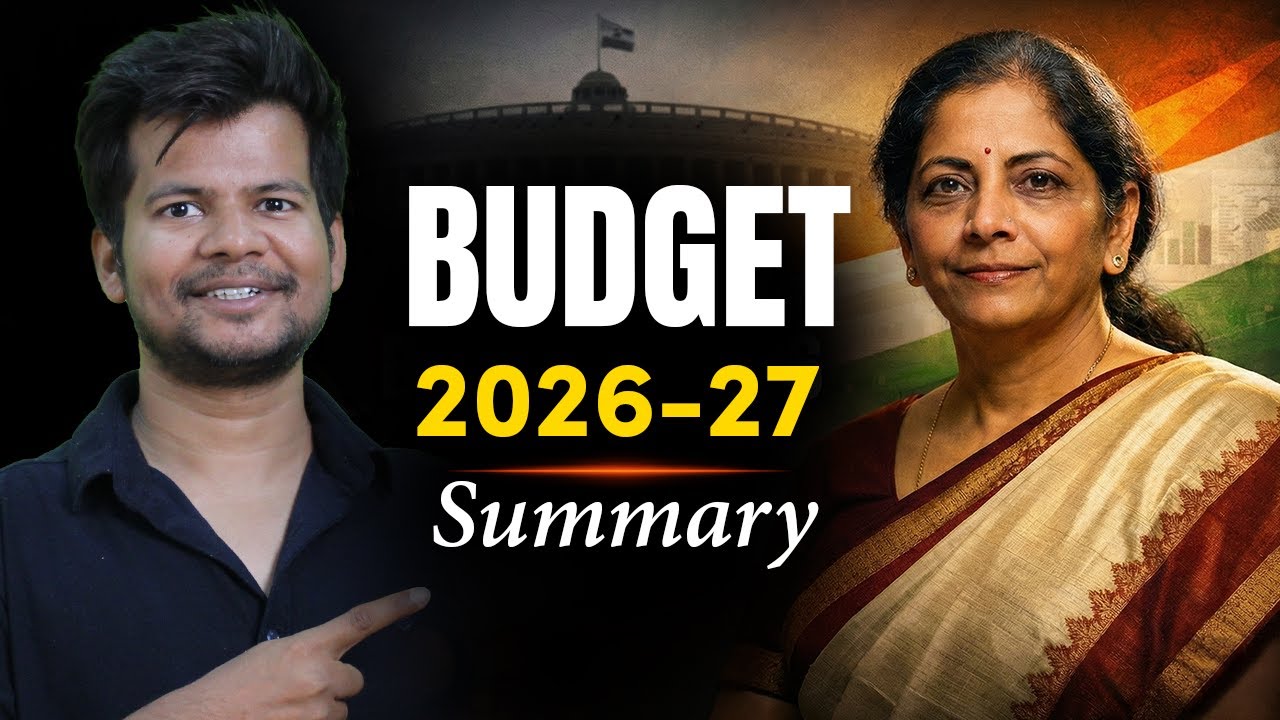
Budget 2026 Highlights: STT Increased on F&O Trading Explained | Income Tax Slabs | Trade Brains
Hook: Real-Life Pain + Clean Sarcastic Humour
Ah, the annual Budget Day—when we all gather round our screens like it’s the Super Bowl, waiting to see if our money has any chance of surviving another year. It’s that magical time when the Finance Minister unveils a host of new ways for us to part with our hard-earned cash (woohoo!). If you’re anything like me, your instinct is to cringe at the thought of "Long-Term Capital Gains" as if it’s a poison ivy patch you accidentally sat on at a picnic. But here we are again, facing a budget that has left us both scratching our heads and counting our pennies.
And let’s not even start on the newly increased Securities Transaction Tax (STT) on Futures & Options trading—a lovely little addition that feels like being told you have to pay extra just to enjoy that free bread at your favorite restaurant. Well, folks, grab your calculators and your sense of humor, because we’re diving into the nitty-gritty of Budget 2026 without losing our minds.
What It Actually Means
So, what does all this financial jargon really boil down to? Think of it this way: if you’ve ever tried to communicate with a teenager, you understand the pain of needing a translator. Budget 2026 is no different; it’s just a heavy dose of legalese designed to tell you, “Congratulations! You’re now subtly poorer!”
When we talk about the increase in STT on Futures and Options trading, picture a tiny gnome (the government) that decides you have to pay him every time you go to buy snacks (a.k.a. stocks). What used to be a small tip in his pocket has now turned into a full-blown "thanks for your business" fee. So, under Budget 2026, if you want to dip your toes in the investment waters, you might just feel a bit more waterlogged than usual.
Deep Breakdown (Serious + Valuable + Easy)
Causes
The government has raised STT to boost tax revenues. The authorities argue that it’s a way to level the playing field in the financial market—because nothing says equality like making trading a little more expensive for the average Joe. It’s like telling everyone that they can ride their bicycles, but you’ll have to pay for every pedal stroke.
How it Works
STT is a tax charged on the purchase and sale of securities in India, especially for F&O—which is like saying you’re paying to play Monopoly but have to give half your money to the banker every time you buy a property. By bumping up the STT rates, the government effectively makes it pricier for day-traders and casual investors.
Why It Matters
Higher STT means lower net profits for traders. Simply put, if your gains were a lovingly cooked meal, STT is that unexpected dog your neighbor has let into your yard, and he’s ready to chow down before you even get a taste.
What People Don’t Know
Many still think trading is a “get-rich-quick” scheme. In reality, with increased taxes like STT, it’s more of a “get-poor-slowly-but-maybe-you’ll-gain-some-wisdom” scheme.
Hidden Sides
Often overlooked, these tax changes can lead to decreased liquidity in the stock market—basically meaning fewer people willing to play the game. Imagine if everyone stopped trying to play bingo because they had to pay taxes on the cards; fun times would end, and you’d be left with a lot of empty chairs.
Industry Behaviour
Traders may adapt their strategies, looking for alternatives or even leaving the market altogether. It’s like suddenly being told the roller coaster at your amusement park comes with a surcharge—for every scream, there’s a dollar bill due. Less fun, right?
Real Consequences
Ultimately, expect less engagement in the market and reduced entrepreneurial risk-taking. It’s the classic case of "the more they tax, the less they attract." It’s a bit of a head-scratcher, much like why we continue to watch reality TV.
Comparison Section (Fun but Factual)
Comparison: Trading in F&O vs. Choosing Pizza toppings
Imagine F&O trading as ordering a large pizza. You’ve got all these toppings (stocks) to choose from, but now the new STT is like an additional charge for each topping. Do you still want jalapeños, or are you fine with just plain cheese?
In one corner, we have F&O—intriguingly complex and potentially profitable. In the other corner, we have your Thursday night pizza: delicious, predictable, and still gives you joy. Under Budget 2026, many might opt for the safer pizza over risky trading, making us wonder if budgeting isn’t just an extended food analogy after all.
How This Affects Your Money / Life / Mind
So, how does this all tie into your everyday life? Well, if you’re heavily into trading, the new STT could feel like getting socked in the wallet after finally scoring some investment wins. Traditionally, one would celebrate a profitable trade—now it might just end up being a quiet nod and a sigh of resignation as you tally up the fees.
Imagine you’ve been saving up for that dream vacation. You’re picturing sun, sea, and perhaps one too many piña coladas. But wait! With the money you’ve lost in trading due to higher taxes, that vacation now looks suspiciously like a “staycation” on your old couch—with reruns of your favorite sitcoms as your travel companion.
Practical Guidance (Actionable Steps)
-
Stay Informed: Keep up with market changes and STT implications; knowledge is your best shield against unexpected costs.
-
Plan Your Trades: Consider the new tax pressures when scheduling trades. Timing might not just be everything; it could save your bottom line.
-
Diversify: Don’t just stick to F&O. Look at diverse investment opportunities to safeguard against the extra tax burden.
-
Consult a Financial Advisor: Sometimes the best action is to ask for advice. It’s like having a GPS for your financial journey; trust me, you don’t want to be aimlessly wandering.
- Budget Wisely: Factoring in STT while making financial goals is crucial. Create a plan that opposes the odds stacked against you.
TL;DR Summary (Funny + Clear)
- Budget 2026: The time of year we collectively cringe and check our wallets.
- STT on F&O increased: Think of it as a cover charge you never wanted to pay.
- Traders might reconsider: Fewer people in the trading pool means more space for sharks—and less fun for goldfish.
- Manage your budget: Stay ahead or risk an "ouch" moment at year’s end.
- Pizza vs. F&O: One’s delicious, and the other turns your stomach when tax season arrives.
Final Thought
And there you have it! Budget 2026 might feel like a sudden jolt—like opening your front door to find your neighbor’s cat staring directly at you as you reach for the last slice of pizza. But understanding your finances might just make it a little less painful. Keep your sense of humor, embrace strategic budgeting, and remember: with a little planning, we can navigate through even the most confusing tax waters—preferably with a slice of pizza in hand!
