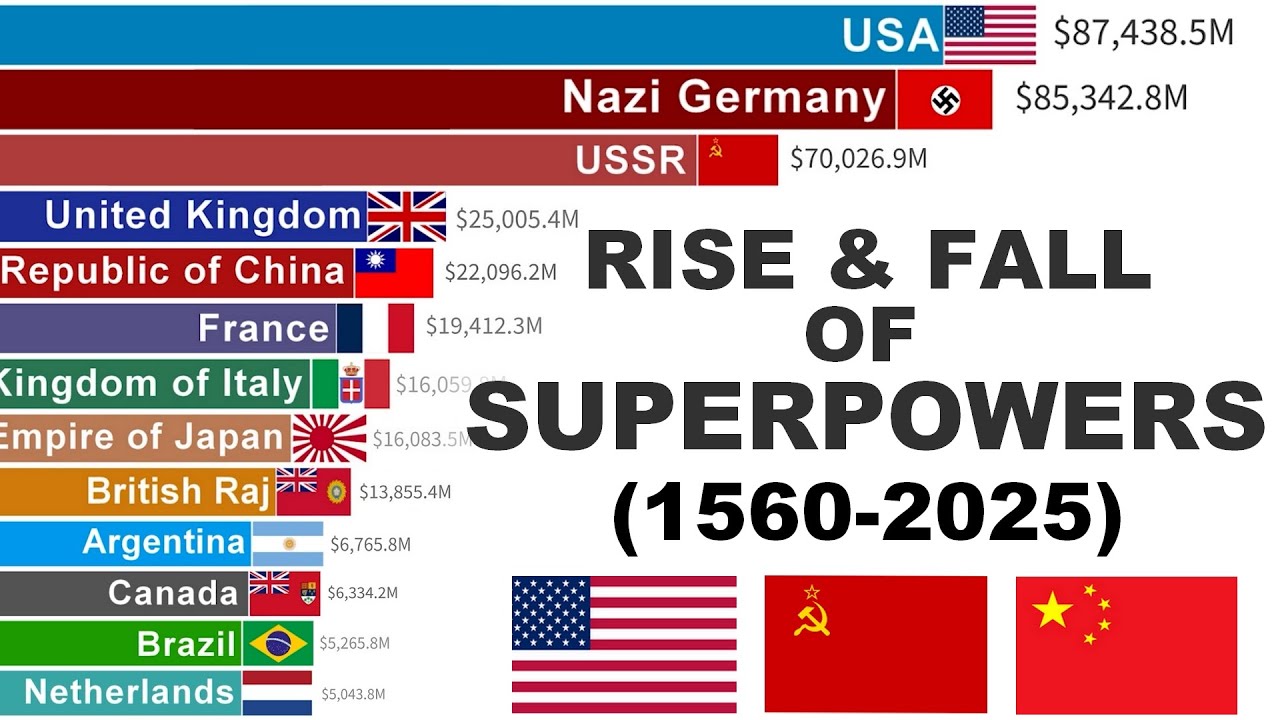
World’s Largest Economies | GDP Epic Battle (1560–2025)
Hook: Real-Life Pain + Clean Sarcastic Humour
Have you ever looked at your bank account after a weekend bender of takeout and impulse purchases and thought, “Wow, I could probably fund a small country right now… if only I was a country?” Well, welcome to the world of economic giants, where countries battle it out in the GDP ring like it’s the final round of a heavyweight boxing match. Picture this: while you clutch your empty wallet, nations are flexing their financial muscles, trying to outshine each other with staggering Gross Domestic Product figures. Seriously, it’s like watching a bunch of teenagers in a donut-eating contest—you just know someone is going to regret their life choices.
What It Actually Means
So, you might be wondering, what is GDP, and why should I care more about it than the latest TikTok dance challenge? GDP, or Gross Domestic Product, is essentially the total value of all goods and services produced within a country during a specific timeframe. Think of it as the world’s largest economic report card, with GDP as the grade everyone brags about at the reunion. A higher GDP means a country is kicking economic butt and taking names, while a lower GDP might leave you feeling like the kid who tried to talk to the cool kids but ended up with a slice of cold pizza instead.
Deep Breakdown (Serious + Valuable + Easy)
Causes
The factors influencing GDP are about as varied as the toppings on your Sunday pizza (and maybe just as messy). From government policies, consumer spending, and technological innovations to global trade dynamics, everything plays a role. For example, if tech companies launch something shiny and new, you bet your bottom dollar (which, by the way, isn’t going very far) that GDP is going to jump.
How It Works
GDP can be calculated via three main approaches: the production approach, the income approach, and the expenditure approach. Don’t worry, no mid-term exam required here. Basically, it looks at how much stuff is made, how much money is made from that stuff, and how much people actually spend on that stuff. It’s a comprehensive methodology that would make your high school math teacher proud, if only they knew what “economics” actually was.
Why It Matters
Why should you care? Well, GDP is a huge indicator of a country’s economic health and serves as the foundation for policies that could directly affect your job, your pay, and your ability to buy a decent latte without using your student loan money.
What People Don’t Know
Here’s a plot twist: GDP doesn’t measure happiness, societal well-being, or quality of life. Imagine a country full of rich individuals living in golden mansions while everyone else is trying to figure out how to pronounce quinoa. GDP can sometimes give a fairy tale ending that isn’t aligned with the reality of average citizens’ lives.
Hidden Sides
One hidden side to GDP is that it often overlooks the informal economy. Yes, I’m talking about those side hustles you and your friends engage in during your free time. Whether it’s flipping vintage furniture or reselling exotic plants to hipsters—these activities can add to a nation’s wealth without ever touching the official GDP books.
Industry Behaviour
Industries behave like socially awkward teenagers. Some are booming and going to prom—looking fabulous—while others are in their dark rooms binge-watching Netflix. Industries like tech, e-commerce, and renewable energy are thriving, while traditional manufacturing might be feeling more "end-of-high-school-math-class."
Real Consequences
The real-world consequences of GDP fluctuations can feel more dramatic than your favorite soap opera. Economic upturns often lead to job creation and increased services, while downturns can induce panic, unemployment, and, yes, heavier reliance on ramen noodles.
Comparison Section (Fun but Factual)
Imagine the United States and China are competitive roommates. The U.S., with its expansive economy, is like the one who spends lavishly on fancy gadgets—because who doesn’t want a VR headset and a coffee maker that can also talk? Meanwhile, China is the roommate who stocks up on bulk items from Costco—efficient, pragmatic, and undeniably resourceful.
GDP Comparison (2021)
- United States: $23 trillion (chock-full of coffee mugs and tech gadgets)
- China: $17 trillion (the king of export-friendly goods and clever engineering)
Despite their differences, both are committed to outsmarting each other with innovative strategies that make all of us feel like we’re still trying to figure out how to bake a decent cake.
How This Affects Your Money / Life / Mind
If you’ve ever had to tighten your budget because of rising inflation, then you know GDP sometimes feels personal. A thriving GDP means more job opportunities and better paychecks, while a plummeting GDP can leave you pondering life choices over that instant ramen. Picture this: you’re casually scrolling through social media, only to find that your once-thriving local store has shut down—thanks, GDP!
Practical Guidance (Actionable Steps)
-
Stay Informed: Follow economic news. Apps like Bloomberg or The Economist (yes, those exist beyond textbooks) can help you keep your finger on the economic pulse.
-
Diversify Your Income: If you’re not already, consider side hustles. Whether it’s freelance work or selling artisanal cat sweaters, income diversity can be your financial lifeline.
-
Invest Smartly: Research stocks or funds that align with growing industries influenced by GDP.
-
Continue Learning: Take an online course on economics or finance. You don’t have to become a Wall Street wizard, just someone who knows the basics.
- Budget Wisely: Adjust your spending according to economic conditions. A slight shift can make your life a lot more comfortable.
TL;DR Summary (Funny + Clear)
- GDP is the total cash value of a country’s goods and services—like measuring a nation’s economic ego.
- Economic secrets: High GDP doesn’t equal happy citizens. Who knew?
- Nations are starting to feel like competitive gamers, and they take GDP very seriously.
- Your budget might feel thin, but it’s all part of the GDP roller coaster!
- Knowing how GDP works can help you make better financial decisions (and avoid cold pizza in sad moments).
Final Thought
As we march toward 2025, remember: while your personal finances may sometimes resemble a never-ending loop of financial memes, the world’s economies are battling it out for glory like ever-dramatic soap operas. Hang tight, who knows what thrilling plot twists lie ahead? Just remember to invest wisely—because one day, you could be ruling the financial world, or at least eating slightly more gourmet ramen.
