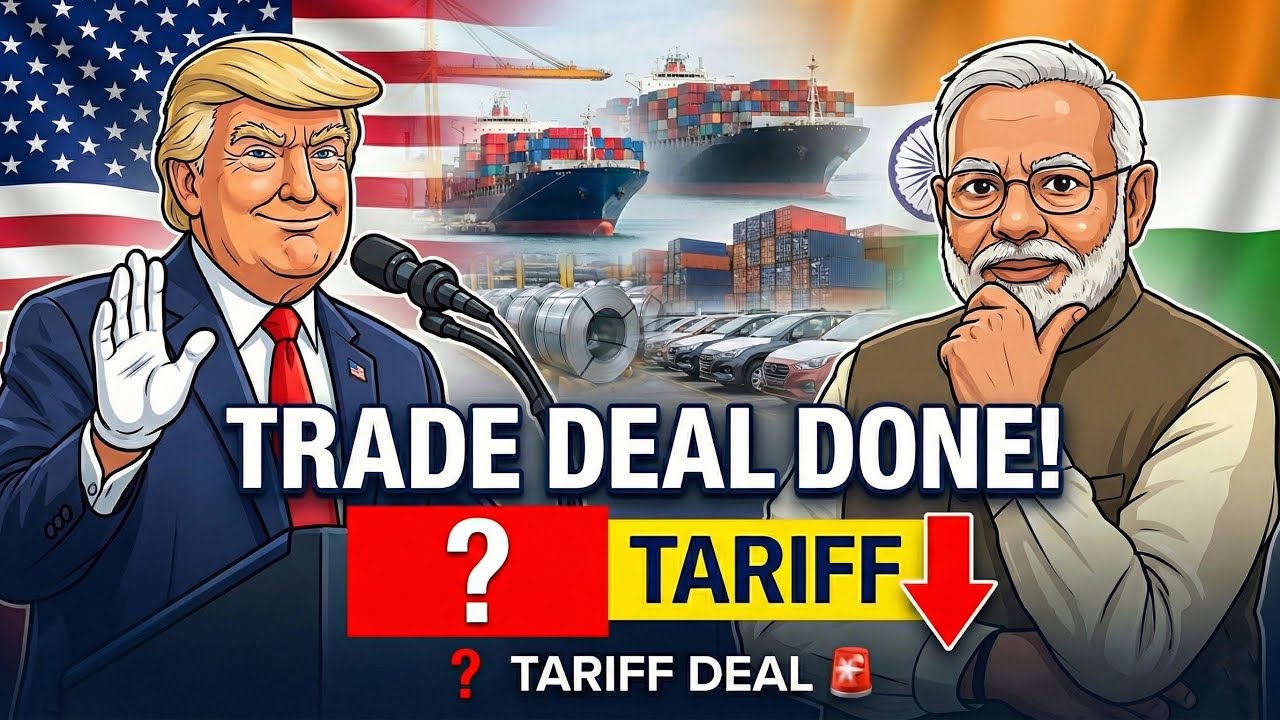
India–US Trade Deal: 🚀 $8 Billion Exports Still Hit High Tariffs? ⚠️ 😨
Hook: Real-Life Pain + Clean Sarcastic Humour
Imagine this: you’re hosting a barbecue in your backyard, and your friend promises to bring dessert. You daydream about the exquisite pies from her mother’s kitchen. You open the door, and there it is—a sad, store-bought apple crumble that looks like it survived a hurricane. Welcome to the world of trade deals!
The India–US trade deal, which promises $8 billion in exports, feels a bit like that pie. Sure, there’s something sweet in it, but the high tariffs are like the crumbles that just won’t let you enjoy your dessert properly. Who knew that trading with the US would be as fun as deciphering your Wi-Fi password when you’re out of data? But hey, don’t worry; we’re here to unwrap this delightful export package together, sprinkling some humor on top!
What It Actually Means
So what’s the deal with this trade agreement? Think of it like two friends trying to decide on a movie. One wants rom-coms, the other craves sci-fi. In our case, India wants to sell goods, and the US is set on imposing tariffs. High tariffs are like that friend who insists on ordering the most expensive nachos at Taco Tuesday, turning a delightful evening into a wallet-ripping, regret-inducing event.
This trade deal is intended to foster better relations between India and the US, enhancing both countries’ export-import balance while promising fresh opportunities. However, the reality is that exporters might face tariffs so high that even your favorite college jeans wouldn’t fit through—awkward and frustrating!
Deep Breakdown
Causes
Let’s dig deeper, shall we? The underlying causes of high tariffs often involve protecting domestic industries. The US doesn’t want its homegrown products overshadowed by imported goods. It’s kind of like how your mom keeps mentioning how much better her lasagna is compared to "those restaurant chains."
How It Works
The mechanics are simple: goods imported into the US from India (and elsewhere) get slapped with fees called tariffs. It’s akin to trying to enter a really exclusive club; once you’re ready to pay that cover charge, you still need to charm the bouncer (in this case, the US trade policies).
Why It Matters
Here’s the crux—we love trade deals, but high tariffs can stymie the growth of industries that rely on exports. In essence, more tariffs mean less money in the hands of consumers. Nobody wakes up thinking, “You know what I need today? Higher prices!” Yet here we are, dealing with trade complexities that make Instagram’s algorithm seem simple.
What People Don’t Know
Most people think high tariffs only affect businesses, but guess what? They trickle down to consumers! Prices go up, and variety goes down, so next time you’re at the supermarket staring at a sad selection of cornflakes, you can thank those tariffs.
Hidden Sides
What’s hidden in the fine print? Environmental concerns! While the US and India strive for economic growth, a rush to sell more could lead to ignoring sustainability. Because, you know, who needs clean air when there’s a profit to chase?
Industry Behaviour
Industries may react unpredictably—think of it as a surprise freeze on your credit card while trying to buy that coveted pair of shoes. If a business’s cost of exporting goes up, they might push prices higher or just glance wistfully at their competition instead.
Real Consequences
So what are the stakes? For US consumers, it might mean increased prices. For Indian exporters, it’s an exercise in agility. Wading through tariffs may feel like navigating a playground with rubber ducks—bouncy but tough to avoid hitting your head!
Comparison Section: Fun but Factual
Let’s compare the trade deal to a family road trip (because every family trip has a little drama).
- Trade Deal: Like planning stops for food, but instead of enjoying tacos, you keep encountering toll booths demanding cash.
- Family Road Trip: Everyone has an opinion on where to go, but you’re still sometimes stuck at a rest stop featuring none of your favorite snacks.
Both situations involve negotiation and compromise, yet neither ends quite how you envisioned – mostly because your siblings argue over who gets to control the music (or in this case, who gets the better deal).
How This Affects Your Money / Life / Mind
Picture this: you finally treat yourself to a special dinner. But by the time the bill arrives, you realize saving for that dreamy vacation just crumbled like your friend’s apple crumble. The trade deal could indirectly mean higher prices for everything from textiles to food—seasoned with a dash of frustration.
For small businesses or even for the regular Joe just trying to buy groceries, it can feel like a cruel joke. Your contribution to the economy may mean you’re paying more for less quality—a tale as old as time!
Practical Guidance (Actionable Steps)
Now, what can you do about it? Here are some beginner-friendly, actionable steps to navigate these choppy waters:
- Stay Informed: Keep an eye on news related to trade agreements. Knowledge is power!
- Support Local: Whenever possible, lend a hand to local businesses. They’re the backbone of the economy.
- Budget Wisely: Plan for potential price hikes—your wallet might thank you.
- Advocate: If you care about the impacts of trade deals, let your voice be heard. Lobby for fair policies.
- Diverse Shopping: If certain goods soar in price, explore alternatives. Your pantry can be inventive!
TL;DR Summary (Funny + Clear)
- India and the US are in talks for an $8 billion trade deal 💰.
- High tariffs could make goods pricier and sadder—like bland salad at a barbecue 🥗.
- Tariffs protect local industries but can hurt consumers—sorry, no pie for you! 🍰
- High tariffs mean hidden costs that could affect all of us—like annoying fees added to that concert ticket you were so excited about 🎟️.
- Support local businesses—they’re the real unsung heroes in this tale! 🌟
Final Thought (Signature Style)
As we wrap this up, remember that trade deals can be a bit like dating apps: lots of promise, but you might walk away with a few lingering questions. Will we get what we expected, or will we just be stuck with overpriced coffee? Here’s to hoping for better trade in the future—minus the tariffs and just like that perfect dessert, served warm and welcoming! Cheers! 🥳
