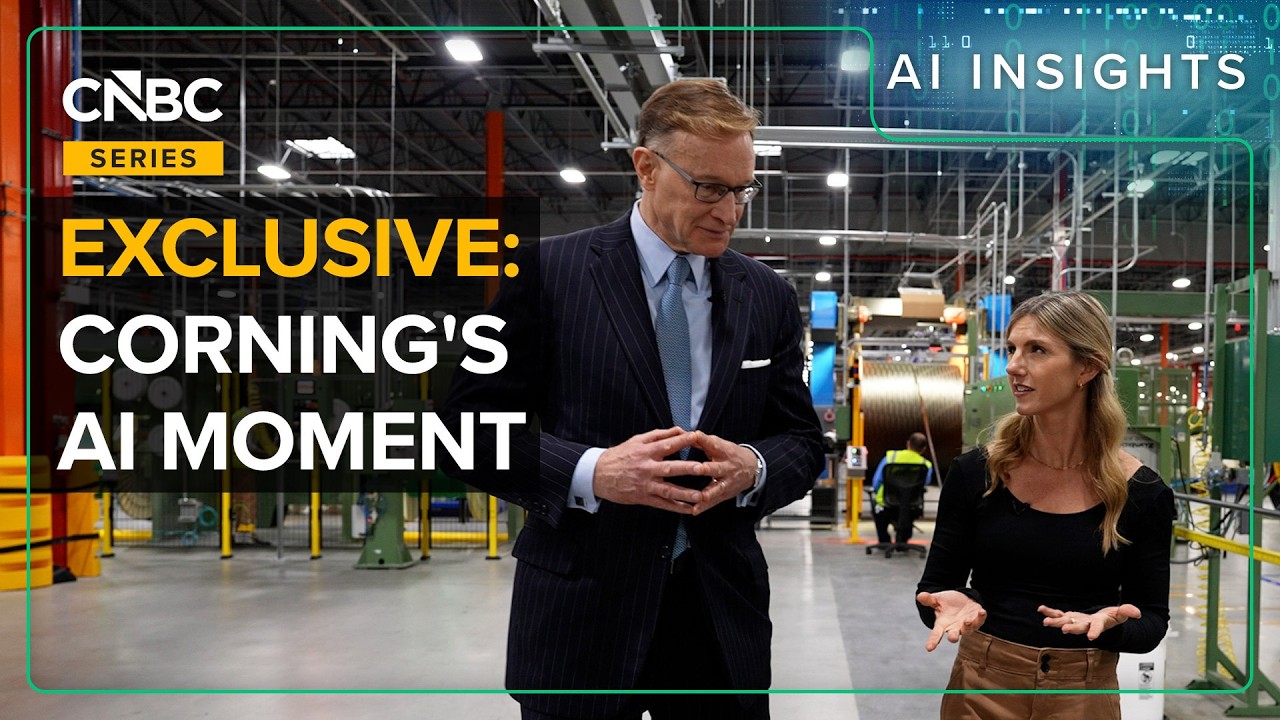
How Corning Invented A New Fiber-Optic Cable For AI And Landed A $6 Billion Meta Deal
Hook: Real-Life Pain + Clean Sarcastic Humour
You know that moment when your Internet speed is slower than a turtle on tranquilizers? You’re eagerly trying to binge-watch that new series everybody’s chatting about, only to be greeted by that spinning wheel of doom. Yup, we’ve all been there. Now, imagine if you could download all seasons in a blip—like, faster than you can say "I’d like to take a moment to thank my Wi-Fi."
Well, Corning, the wizards of the glass world, have designed a new fiber-optic cable that promises to revolutionize how we interact with AI—and they managed to snag a whopping $6 billion deal with Meta (yes, Facebook’s cool cousin). So, sit back, grab your popcorn (you won’t be pausing for long), and let’s dive into how this game-changing technology came to be without sending you into a technological tailspin.
What It Actually Means
Alright, let’s break this down simple, like setting your phone to airplane mode when your kids are screaming in the background. Fiber-optic cables are like the highways of internet data—they’re made of thin glass strands that transmit data at the speed of light. Yep, LIGHT. Think about that speedy little squirrel who just dashed across the road; these cables are faster than that!
Now, Corning’s latest innovation is all about making these highways smoother and less congested. With their new design, data can zip around with minimal traffic jams—hi, buffering, your days are numbered! More data at faster speeds means your AI applications can process information in real time—think autonomous cars whizzing past without a hitch.
Deep Breakdown (Serious + Valuable + Easy)
Causes
So, what sparked this fiber-optic enlightenment? As demand for faster internet and sophisticated AI solutions has surged (thanks, pandemic binge-watching), so has the need for robust infrastructure. It’s like trying to feed a T-Rex with a Kit Kat—totally insufficient!
How it Works
The magic happens within these tiny glass strands, which utilize light pulses to send data. Each pulse is like a mini-message zooming across, carrying information at breakneck speed. Imagine sending and receiving texts through telepathy—kinda like that, but way cooler.
Why It Matters
Here’s the kicker: with more efficient data transfer, AI can perform processes that were once thought impossible in real time. Think advanced medical diagnostics, smart home devices that understand your quirks, and virtual assistants that don’t just remind you of meetings but also suggest a snack break (because priorities!).
What People Don’t Know
Here’s a fun fact: Corning has been at the forefront of fiber-optic technology since the 1970s. They didn’t just wake up one day, decide to play with glass, and stumble upon a billion-dollar idea. No, they’ve been fine-tuning this art for decades.
Hidden Sides
But, there’s a flip side. The production of these cables can be resource-intensive, leading to environmental concerns. It’s the tech industry’s version of having your cake and worrying about the calories.
Industry Behaviour
The race for faster connectivity is turning tech giants—like Meta—into starry-eyed dreamers. Everyone wants a piece of the AI pie, and Corning’s technology is like the secret ingredient that makes it taste even better.
Real Consequences
Therefore, every time you binge-watch without interruption, you can thank fiber-optics… and maybe also the development team at Corning for speeding up the process.
Comparison Section (Fun but Factual)
Think of this advancement as the difference between dial-up internet and fiber-optic connectivity. With dial-up, logging online felt like waiting for that party invite nobody was going to accept. Remember those awful sounds? Fast forward to now—fiber optics are all like, “Why wait? Let’s make Netflix a tragedy-free zone.”
Or, consider a crowded highway vs. an open road: one error can set you back hours, while the other zips you right to the finish line. Which one would you rather drive on? Exactly!
How This Affects Your Money / Life / Mind
Imagine getting a text from your bank saying your application for that dream home has been approved. Thanks to AI powered by lightning-fast fiber optics, algorithms can process your application in record time. No more endless waiting with your credit rating hanging in the balance!
On a more personal note, consider AI-enhanced virtual assistants who actually understand your calendar and your coffee needs. They’ll remind you to take breaks and might even upload your content as those pauses turn into snack breaks—count me in!
Practical Guidance (Actionable Steps)
Feeling overwhelmed? Fear not! Here are simple steps to navigate these tech waters:
- Stay Informed: Follow tech news platforms and blogs to keep abreast of fiber-optic advancements.
- Evaluate Providers: When shopping for internet service, look for providers that are investing in the latest fiber-optic technologies.
- Consider Upgrades: If you’re on an old connection, upgrading your internet can be life-changing.
- Experiment: Use AI tools to streamline your tasks—try apps that use machine learning for schedules, reminders, or even budgeting.
- Engage with Community: Join forums or groups where tech enthusiasts share insights on how to maximize these tech advancements.
TL;DR Summary (Funny + Clear)
- Corning invented a snazzy new fiber-optic cable; it’s great for AI—like a caffeine kick for your Internet.
- Meta just threw $6 billion at it—why, you ask? Because they like shiny things.
- With this tech bump, your AI will ditch the dial-up vibe; it’ll be more like a Ferrari now.
- And yes, fewer spinny wheels during your binge sessions—finally.
Final Thought (Signature Style)
So, the next time you’re streaming without interruptions, give a little nod in the direction of Corning. They’ve turned fiddly glass into gold—and made our lives just a pinch easier. Who would’ve thought mere glass could make such a difference? Life is funny that way. Now, go enjoy your series—without pausing for pizza! 🍕
