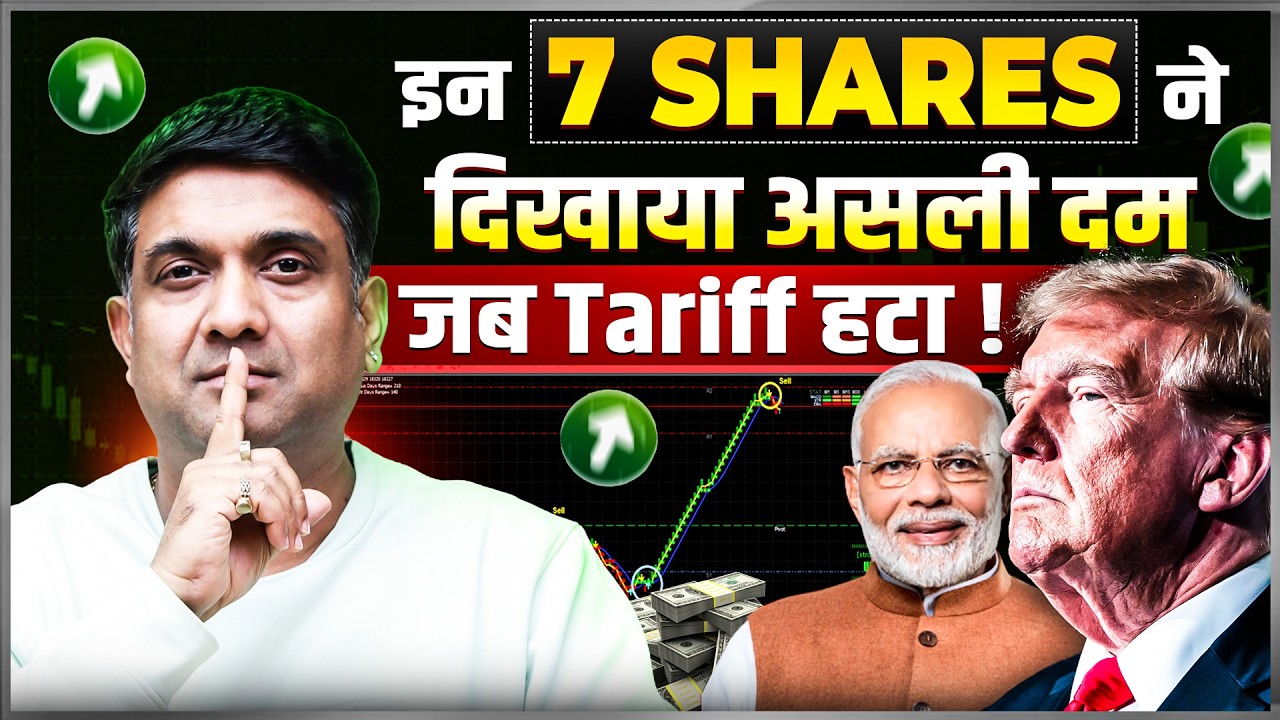
Trump Tariff Cut Impact on Stock Market: Adani, Textile, Pharma Rally Explained
Hook: Real-Life Pain + Clean Sarcastic Humor
Ah, the stock market—a place where dreams go to thrive, collapse, and sometimes attend existential crises. You’d think after the last couple of years, we’d get the memo and stop checking our portfolios like they’re our middle school report cards, but here we are. The recent news about Trump’s tariff cuts is like opening a gift that you didn’t ask for. You’re excited, suspicious, and secretly hoping it’s not a set of socks again.
If you’re anything like me, with a mild case of anxiety hovering over stock reports like a cloud of bad weather, you’ve likely experienced that moment when your stock takes a dive and you think, “Great, just what I needed today!” Well, grab your favorite beverage and strap in—it’s time to dissect what’s happening with the stock market in the wake of this tariff cut and how it’s sending the shares of companies like Adani, textile manufacturers, and pharma stocks soaring like they’re competing in the Olympics.
What It Actually Means
So, what does a Trump tariff cut actually mean in plain English, or at least the closest we can get to it? Picture this: tariffs are like the burly doormen at an exclusive club, bouncer-ing (yes, that’s a verb now) foreign products and forcing them to pay a hefty cover charge before entering the market. When the tariffs are cut, it’s like the doorman has suddenly decided to turn down a few pounds and allow more people in for a lower fee. More goods enter, prices often drop, and consumers are either dancing in the aisles or crying into their overpriced lattes.
It might sound technical, but at its core, it’s about easing trade restrictions to stimulate business. It’s sort of like giving everyone a holiday bonus but without the awkward company party.
Deep Breakdown (Serious + Valuable + Easy)
Causes
The tariff cuts are primarily a response to ongoing trade negotiations and geopolitical factors. Governments often adjust tariffs to strengthen relationships or stimulate specific industries. Just when you thought fall semester exams were the only time you would hear the word "negotiation"!
How it Works
When tariffs drop, importing businesses can bring in raw materials and goods at a lower cost. It’s a win-win, right? Consumers get a better deal, manufacturers get a break, and your friendly neighborhood stockbroker gets to feel important again.
Why It Matters
This cut isn’t just a simple act of kindness—it directly impacts the cost of doing business, consumer prices, and ultimately, your economy. And let’s face it, in an economic climate that feels about as stable as a one-legged flamingo on roller skates, every little bit helps.
What People Don’t Know
Not all industries dazzle under the spotlight. While some sectors might bloom, others could experience a bit of a wilt. The textile and pharma sectors, for instance, could be sending thank-you notes, but there will always be those gears that refuse to turn.
Hidden Sides
Surprisingly, not everyone is on the “Let’s throw a confetti party!” train. Some local industries might struggle because they can’t compete with the cheaper imports flooding the market. Think of it as a middle school classroom where one kid can afford all the trendy supplies—you know, the kind with the glitter and neon colors—while others are still rocking the plain old pencil.
Industry Behavior
Stock prices react like teenagers at a pop concert—some soar, others remain flat. Adani, textiles, and pharma are seeing a surge, potentially because they can save money on materials or gain a competitive edge. Just remember, not all industry rallies end in happy dances.
Real Consequences
The end game? Fluctuating prices at your local store, stock brokers chugging their coffee a little less frantically, and the potential for shifting job markets as industries adapt—or adapt poorly.
Comparison Section (Fun but Factual)
The stock market reaction to tariff cuts is like a party where some are the life of the event while others sit in the corner staring at their phones. Take the textile sector, which is suddenly getting more shine than your morning coffee, versus the tech sector, which might be in an existential crisis, wondering where all the good times went.
It’s akin to comparing a golden retriever chasing a frisbee (textile stocks) to a cat hiding under the couch (tech stocks). One’s excited and moving forward, while the other… well, let’s just say it’s not going anywhere fast.
How This Affects Your Money / Life / Mind
Imagine walking through your local market and noticing that your favorite t-shirt brand is now a bargain—thanks to that tariff cut! Your wallet feels a little lighter (in the good way), and suddenly, you have the cash to splurge on that fancy coffee. But jealousy doesn’t only live in limbo for consumers; investors are either gleefully high-fiving each other or nervously checking the news.
This scenario isn’t just numbers on a screen; it could mean potential growth in your investments or, conversely, watching them dwindle. Your emotional ride through the stock market is a roller coaster with twists, turns, and occasional nausea. And we all know how much those rides cost at an amusement park.
Practical Guidance (Actionable Steps)
-
Stay Informed: Keep an eye on news reports related to tariffs and trade. You’ll look like the smartest person in the room during conversations.
-
Diversify Your Portfolio: Don’t put all your eggs in one basket—unless they’re chocolate eggs; then go for it.
-
Watch Consumer Trends: As prices fluctuate, be on the lookout for how sectors react and which ones gain traction.
-
Consult an Expert: If all of this is sounding like a foreign language, investing in a financial advisor can decode the jargon for you.
- Be Patient: The market dances, often requiring a whole lot of patience and a sprinkle of humor along the way.
TL;DR Summary (Funny + Clear)
- Trump’s tariff cuts are like getting a surprise discount at the grocery store—exciting but also confusing.
- Adani, textile, and pharma stocks are dancing like they’ve won the lottery.
- Not all industries are partying; some are quietly sulking in the corner.
- Prices might drop, and your shopping experience just got a whole lot more fun.
- Your investments could be in for a wild ride—hold on tight!
- Check your portfolio less frequently (it’s good for your heart).
- Always diversify; eggs in one basket could lead to omelet disaster.
Final Thought
So there you have it, folks! The mystery of tariff cuts unfolding before your very eyes. Just like that intermittent roommate who mysteriously vanishes for a week, only to return right when you need someone to binge-watch a show with. Life’s all about cycling through its wild roller coasters with a smidge of humor and a splash of understanding. Now, go forth and conquer the stock market—or at least, try not to cry when checking your investments. Cheers!
